Friday, April 26, 2013

How's the 3D in 'Jurassic Park 3D'?


Background:

You know the story of Jurassic Park's 1993 release. It was "An Adventure 65 Million Years In The Making." It busted all blocks there were to be busted; it claimed the title of #1 Highest Grossing Film of All Time (until Titanic came along); it seared words like "CGI" and "Digital Sound" into the public consciousness; it inspired two sequels and then... never really got old. Two decades on, the effects in Jurassic Park are still held as a benchmark by many. Either the experience of watching it was so seminal for a generation of blown-away moviegoers, or - shockingly - the film has aged like a fine wine and improved with time. Universal is celebrating the film's 20th birthday (we feel old just typing that) with a 3D re-release. Audiences are slowly warying of these 3D retrospectives, but Jurassic Park 3D's launch looks to have reversed a downward trend in re-release box-office grosses. Perhaps that's because Jurassic Park is best seen with friends, or maybe, people of all generations just really wanted to see big-ass dinosaurs romping and stomping over Isla Nublar on the big screen one more time. Let's have a look at how its 3D turned out.

Post-Converted 3D:

Steven Spielberg, and his cinematographer Dean Cundey, originally shot Jurassic Park on 35mm film, on location in Hawaii. While most audiences remember Jurassic Park as the true dawn of CGI effects, in truth there are only a few shots in the movie that feature computer animated dinosaurs. The majority of the action was completed using massive animatronic puppets created by Stan Winston Studio. Take a look at this video created by the team who made the Velociraptors if you need convincing! So, while most of the CGI was rendered at a much lower resolution than is standard today, the rest of the in-camera filmed dino-footage still looks as good as it did in 1993. When rain bounces off the T-Rex's nose... that's because that snout was really on set. The size of the dinosaurs no doubt completely terrified the actors who were there with them.

Anyway, long story short, this on-screen realism makes Jurassic Park a reasonable candidate for the post-conversion process. Apparently Spielberg was blown away by the team who converted Titanic's 3D re-release (saying the Cameron film "looked like it had been shot originally in 3D") that he hired the same team to look after Jurassic Park's conversion. Word on the street is that Spielberg's supervision of the process lasted more than a year, and the conversion cost somewhere around $10 million to pull off. Apparently the conversion was 'manipulated' slightly, to include elements that were added especially for this version of the film (those who've seen ET's 20th Anniversary Edition might not be surprised by this...) stuff like more digital rain in the T-Rex attack scene, to add a more 'native 3D' feeling to certain shots.

Does the 3D 'pop'?

Yes, but not as often as you'd expect, and rarely very far beyond the confines of the screen. Mostly these moments are jump-scares - the famous one where a 'raptor leaps upwards at our heroes stands out - but the best shots are ones where dinosaur features like a tail or a jaw are extended just enough to make you appreciate the enormity of these creatures.

How's the depth of the 3D?

Things start to go off-the-rails with Jurassic Park's conversion when we start looking at its emulation of depth. Imagine a shot filled with ferns, where a few are digitally brought further forwards than their peers. This is an eminently reasonable thing to do if you need to create the illusion of 'depth' from a 2D image. Unfortunately for Jurassic Park, this sort of trick seems to back-fire quite a bit: the fern that's been brought forward is grainy and filled with noisy artefacts that betray the illusion. The deep background and the majority of the midground look fine, because they're either at 100% of their size, or they've been shrunk and blurred, but the foreground frequently appears detached from the rest of the image. If you can get over the harshness of the film grain though, you'll definitely enjoy the range of depths offered, particularly in scenes featuring the (apparently free-roaming) Brachiosaurs.

Did it make sense to add 3D to Jurassic Park?
The answer to that question is a bit mixed. You have to look at three factors here: audience perception, commercial necessity, and then - more boringly - the perspective of keen stereographic fanboys like ourselves at 3Defence. Let's start with the audience pereception. Anecdotally, most people consider these dinosaurs the best looking ones ever put to film, and everyone wants to see gigantic dinosaurs eating people... right? Seeing them in 3D is a bonus, if it further helps sell the illusion these creatures are real.

Looked at purely commercially though... next year, for better or worse, we get to see Jurassic Park 4. This re-release was likely motivated by a need to conjure up 'brand awareness' and 'relevancy' again. For all we know, the $10 million conversion costs were attributed to the marketing budget of JP4, particularly because it helps put that sequel on surer footing. There's no word yet on whether JP4 will be in 3D (shooting starts in July, so details in general are hazy) but it's safe to assume it'll have a stereoscopic version of some kind released. In the meantime, these are the best dinosaurs on offer at a multiplex.

Looked at from a more practical (and geeky) perspective though, 3Defence always had some reservations about this conversion. The main set-pieces don't lend themselves to "the 3D experience" at all. For example, the T-Rex and Dilophaurus attacks occur in dimly lit night-time scenes; the 'raptor attack is largely contained to a dimly lit kitchens, hallways and offices; while the sick triceratops scene has dull looking colours in it throughout. Even the film's producer, Kathleen Kennedy, says "so many of the big, iconic, moments are in relatively small spaces." Thinking about it, we'd actually argue The Lost World's brightly lit, almost harsh, vibrantly coloured palette might have been better suited to 3D projection. We went to this film cautiously optimistic, but we came out convinced our gut instinct was right all along: Jurassic Park was a tough film to get right in 3D, and never really lent itself to the conversion process.


If we had to archive one version, should we save the 2D or the 3D?

The appeal of Jurassic Park has always been that it felt like someone somehow made a 'B-Movie' into an 'A-Movie'. Despite its blockbusting reputation, it's actually quite a small film, cobbled together with focused set-pieces in small spaces, wonderful character actors and a mere $63 million budget. In 2012, 3Defence had the pleasure of watching a 2D digital remaster of Jurassic Park and the film felt more honest, visually. The 2013 version's 3D effects change your perception of the film from being an 'over-performing B-Movie' to one where you come away thinking "that's a pretty strange A-Movie." The 3D layering is done reasonably well, but they sometimes add grain where there shouldn't be, and they darken the image in the few moments of levity and light. Ultimately, this 3D conversion was one we couldn't get behind.

The film itself

It is that rarity in modern cinema: a blockbuster that has barely aged a day, maybe even improving since its release. That's probably because Spielberg surrounded himself with amazing collaborators: John Williams still at the peak of his powers, Stan Winston's studio literally firing on all cylinders, ILM completely re-writing the rulebook for digital effects, and - of course - Jeff Goldblum in all his glory. Jurassic Park remains a fantastically fun film, whether you view it with glasses on or not. In this case though, we recommend the 2D version, to experience JP in all its uninhibited glory.

Wednesday, April 24, 2013

How's the 3D in 'Oz The Great And Powerful'?


Background

Oz The Great And Powerful is Sam Raimi's first 3D movie. Having licked the wounds of Spider-Man 3, Oz marks Raimi's return to the land of gigantic budgets, tons of CGI and 'franchise friendly' material. Optimists viewed the release of Oz as an opportunity for L. Frank Baum's classic novels to be visualised in the modern age, leading to a series worthy of their reputation as American Mythology. Cynics viewed the film's existence as a greedy crash-grab by Disney, fuelled by the phenomenal +$1billion box-office success of Tim Burton's Alice In Wonderland. Meanwhile, others fretted that the 1939 classic Wizard Of Oz was just as fresh today as it was then and, frankly, didn't-need-a-prequel-thank-you-very-much. So... having set the scene for audience expectations, let's dive into the 3D of Oz The Great And Powerful!

Native 3D

If you fell in the 'cynic' camp of the audience, you might be surprised how little 'cash-grabbing' was involved in the production of Oz. Despite being the first digital feature for either Raimi or his regular cinematographer Peter Deming, the pair decided to go all-out and shoot native-3D using Red Epic cameras with 3ality Technica rigs. They chose to mimic the 1939 Wizard of Oz film's colour and ratio shift between Kansas and Oz, with their own ratio change moving from an old-school Academy Ratio of 1.375:1 expanding outwards to an anamorphic 2.35:1. Shifting to the latter caused headaches for a few departments, who - usually out of self-interest because it requires less work - generally prefer a boxier frame. Of course the wider screen size also makes it harder for the human eye to focus on things in 3D, so more effort is required in the editing of the picture to make sure the audience doesn't suffer the crew's headaches.

Raimi also emulated the 1939 film by shooting entirely on a gigantic Michigan soundstage. Oz's crew constructed vast real-world sets that could be populated with actual props and hundreds of costumed extras. Given the busyness of the on-set footage, and the way Raimi likes his cameras to roam omnipotently, it probably appeared intuitive and cost-effective to film in native-3D.

Does the 3D 'pop'?

Some reviewers of Oz complained the film-makers tended to throw things at the audience more than they'd have liked. Others appreciated the gimmicks, with Time magazine saying, "the 3D effects are plentiful — hats, lions and baboons jump off the screen and into your lap." Tonally, the film sets the stage well for this effect; it's a film about a wannabe magician who is desperate for gratification, and will resort at razzle-dazzle sleights of hand to affect a sense of wonder from his audience. Is this the first 3D film to be thematically ironic in its overt usage of 'shock and awe' 3D techniques? Is Sam Raimi implying he sympathises with the pretend-Wizard's plight; having to conjure effects out of thin air that rival those of his Houdini-like heroes? So, yes, the 3D pops. Frequently. This is done sometimes by using faux frames that are then busted out of (sort of like the fish in Life Of Pi) and with others it's done using a true stereoscopic effect that reaches beyond the confides of the screen. These effects suffer no lack of clarity, so they clearly made good usage of the Red Epic camera's amazing resolution, which apparently allows the effects team to enlarge footage 50% or so without any signs of degradation.

How's the depth of the 3D?

Interestingly, these thematic and visual considerations often don't reach much farther than the foreground. The background of Oz seems to feel... static. It's as if the effects and action are so startlingly in-your-face that the designers of the film decided to just paint the background in. That may well have been Raimi's intention. Notice how the 1939 film used stationary matte paintings to make the studio-shot background stretch into nothingness, and how Raimi has replicated that feel in his 2013 version. The Hollywood Reporter astutely pointed out "As professional and accomplished as the effects appear in 3D, however, there is something almost cartoon-like about most of the scenery and backdrops, which are mostly placid and benign rather than spooky or threatening." In sum, there's nothing particularly noteworthy about the usage of depth in this film.

Did it make sense to film in 3D?

It is historically 3Defence's strong view that 3D is  projected better when it features bright colours and light. We've seen it time and again - modern 3D effects that are remembered are the ones that are shot in daylight, or have a brilliant illumination in their night-time scenes. It's not that 3D can't be shot subtly, it's just that it's much more reliably impressive (and requires less planning ahead of time) if you go for the Whiter Whites Brighter Colours approach. Now, think of the key things to do with Wizard of Oz folklore: "the yellow brick road", "the Emerald City", "the green Wicked Witch", "the horse of many colours", "Munchkinland"... we'll let you be the judge if it made sense to film in 3D.

If we had to archive one version, should we save the 3D or the 2D?

Save the 2D! This is a gorgeous film, and deserves to be seen as its maker, perhaps unwittingly, intended: fully aware of its soundstage-filmed confines, over-saturated in colour, over-acted, and over-blown without needing glasses as an intermediary. It's worth noting too that Oz The Great And Powerful might have been a better candidate to debut 48fps out on the world. Oz's staged feeling (or-might-it-all-be-a-dream) would have lessened the artificial feeling some felt from watching The Hobbit in that format, and it would certainly have done a lot to reduce motion-blur. Oz suffers from 3D-worsened blur worse than any film in recent memory. Sam Raimi's camera is too wild and active for your eyes to keep up with when they're splitting the difference of 24 frames per second. Unconstrained by budget, like Peter Jackson before him, he crams the foreground of every frame with CGI beasties and beauties that your eyes are frequently overwhelmed. In 2D, this film would be an absolute joy.

The film itself

It's fun. It's a true return to form for Sam Raimi, who's proven recently he can still direct horror with the best of them, and now that he can still create big-screen spectacle worth seeing. Spider-Man 3 is a distant memory, thanks to the wonder of Oz. A shame then we weren't as big a fans of the 3D as we would have liked to be.

Saturday, January 19, 2013

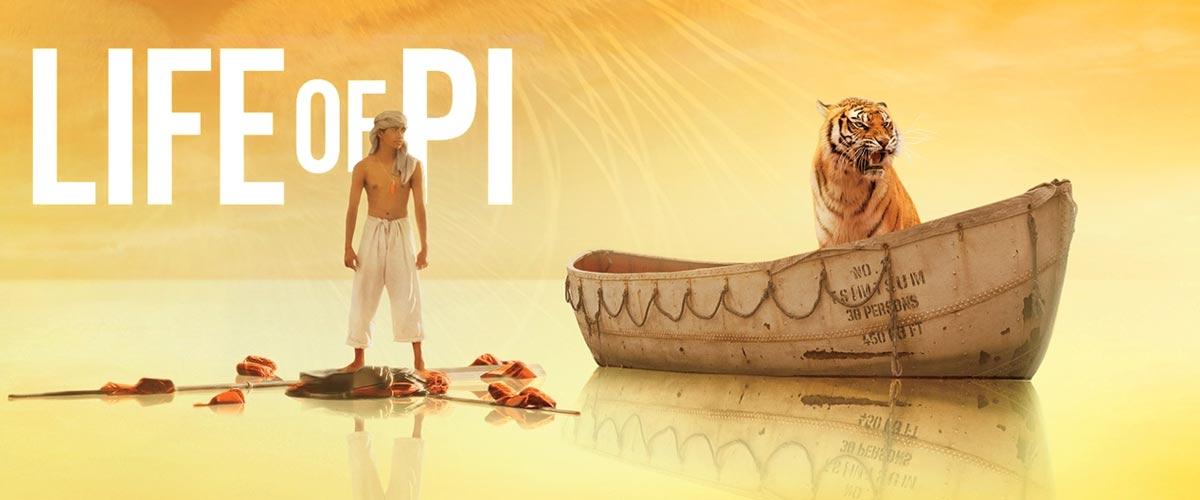
How's The 3D In 'Life Of Pi'?


Background

Considered an 'unfilmable' book, Life Of Pi has been kicking around Hollywood for years. Despite being briefly in the hands of Shyamalan and Jeunet, the burden of adapting Yann Martel's award-winning novel eventually fell to Ang Lee. A proven master of visual effects in films like Crouching Tiger, Hidden Dragon and Hulk, Lee seemed a good fit for the material. Eyebrows were raised though, when Lee announced he would film in native 3D; the wider industry seemed to ask, "doesn't he have enough trouble with the tiger and the ocean?" If you're after more background info, check out this 3Defence piece from a couple of months ago.

Native 3D

Claudio Miranda and Ang Lee on the Life Of Pi shoot
Life Of Pi was shot using Alexa cameras on Fusion 3D rigs provided by the Cameron Pace Group (as in, James Cameron). In charge of the film's visuals was accomplished cinematographer Claudio Miranda, whose most recent film was the similarly stunning Tron: Legacy. Between these films, his prior work with David Fincher, and upcoming film Oblivion, Miranda is carving out a niche for himself as one of digital cinema's true pioneers. If you're interested, we recommend having a read of this article to read about the challenges Miranda faced, filming digital footage whilst being surrounded by water. The crew had to contend with very bright reflections, whilst always measuring how 'seasick' the audience might feel bobbing up and down along with Pi and his tiger, Richard Parker.

Does the 3D 'pop'?

Does it ever! Ang Lee was reportedly motivated to film in 3D because of the new cinematic language it offered him (and not motivated by financial necessity or 'fad' like frenzy). His choices in Life Of Pi reflect this desire to learn and to innovate. The most significant trick he deployed was to add subtle letter-boxing to shots, to allow elements to jump out of the frame without actually popping out of the screen itself. You can see this technique in use in this picture, where a fish tail briefly flashes outside of the black border. This approach drew gasps from the audience 3Defence saw the film with, perhaps because the integrity of the frame was not compromised, and yet the film seemed to defy dimensions with something still managing to break free of the frame.

How's the depth of the 3D?

Life of Pi runs the gamut of depth choices available to modern film-makers. Many scenes favour the 'deep focus' Lee applied to his 2003 film Hulk. Others seem to stretch out to an infinite horizon, the likes of which are impressionistic and - dare we say it - nigh on Kubrickian. Then there are Pi's flashback scenes, which are often shot with incredibly shallow focus, where an actor's close-up is visibly separated from a blurry background. On paper, these stylistic choices may seem a hodgepodge of disparate ideas, but their varied usage in the film's extended opening sequence helps establish visual cues that later create a sort of short-hand that Lee can use to ease his audience into a narrative that jumps around between decades, multiple actors playing the same part, and various changes in scenery too. In short, Lee didn't just shoot in 3D to learn to speak its 'language'; he clearly shot this way so he'd later be able to teach the language.

Did it make sense to film in 3D?

That depends who you talk to. One imagines the crew on Life of Pi dreaded the complications of real tigers, over-bright sets filled with water, and child actors; they didn't need 3D bringing an extra headache to their shoot. Creatively, it makes sense to use every visual trick you can muster when telling a tale which overtly demands your suspension of disbelief in its own narrative. Finally, from a business perspective, the film was always likely to do well in the wider Asian market, where 3D cinema has been doing particularly great business for years, so it makes sense that the film's producers would chase a few extra dollars this way.

If we had to archive one version, should we save the 3D or the 2D?

The 3D version, without a doubt. Life of Pi joins the likes of Hugo and Avatar as an Oscar-nominated triumph that is a superior experience when watched with glasses on. Ang Lee abides by rules set by James Cameron: night-time scenes must have a dedicated light source (bio-luminescence is used here too), editing is allowed to be abrupt if quick-fire shots aren't "overtly 3D", and massive action (like Pi's shipwreck) ought to be framed with a human in the foreground to give us an easy sense of scale. It's clear to the audience that each shot's usage of 3D effects have been clearly thought out, and designed with purpose by master craftspeople.

Roger Ebert, notorious naysayer about 3D technology, has this to say: "What astonishes me is how much I love the use of 3-D in Life of Pi. I've never seen the medium better employed, not even in Avatar, and although I continue to have doubts about it in general, Lee never uses it for surprises or sensations, but only to deepen the film's sense of places and events"

The film itself

The one flaw most bring up with Life of Pi is its extended opening sequence, which deals exclusively with characters who, by and large, disappear from the narrative from Act 2 onwards. Many misread this as a 'waste of time'. The story itself is fiendishly difficult, in that grief plays a large part in the wider tale, and for that grief to seem palpable we must be shown how good things were before they got really, really, bad. Luckily, Ang Lee coaxes great work from his child actors and shoots these scenes with a warmth and sure-footedness that makes the shock of being stranded at sea that bit more effective. We at 3Defence didn't mind the pace of the film one bit - as an epic piece of cinema that traverses continents, it is a worthy Awards-season contender from 2012.

Tuesday, November 13, 2012

How's The 3D in 'Bait'?

Background:

Bait asks the question none of us were asking: what would happen if you were trapped in a supermarket, after a tsunami... with a great white shark? Any self-respecting fan of B-movies already knows the answer to that question though: death, and lots of blood. Bait 3D caps off a year of 3D films like Abraham Lincoln: Vampire Hunter, Piranha 3DD and Frankenweenie that take the idea of 'high-concept' to ludicrously brilliant extremes. Indeed, Bait went on to become the highest-grossing Australian film released in China, so this type of 3D cinema is likely to continue.

Native 3D:

Bait 3D was filmed in Native 3D, not post-converted
Bait was filmed in Australia by many of the people who shot the Second Unit photography in films like the Matrix trilogy and Superman Returns. Despite its many and varied challenges under-water, they filmed Bait in Native 3D. Until now, shots like the ones they pulled off have been considered one for the 'too hard' basket. Water photography has always been tough on film crews, but to get the right spacing for stereoscopic cameras has been thought to be nigh-on impossible. According to an interview here, they shot glorious footage of a submerged supermarket with the help of a uniquely designed air-cooled camera casing, which allowed the crew the flexibility to capture background depth and emotion from their performers too.

Does the 3D 'pop'?

Yes. Almost for comedic effect. The screen is usually a defined wall between the audience and the action, but every now and then a shark will jump several feet out of the water, directly aiming at the audience. There's really not much more to say about this effect - it's a return to the sort of gimmicky 3D shot we traditionally associate with 3D films made before this century. This ought to not be considered a bad thing, mind. Each time the effect was used in the screening 3Defence attended, the (admittedly very small) audience roared with 'so-bad-it's-good' laughter.


How's the depth of the 3D?

In an interview here, the film's director outlines his view on depth in 3D films: "A common misconception is that having objects really close to camera will make things look great in 3D. In fact the opposite is true – it's far more important to make sure there is a mid-ground as well, rather than just a foreground and a background." Certainly, being confined to two or three rooms for much of the film constrains the action to play out reasonably close to the camera, but every now and then the deep background is used to great effect to show off how far away a shark is at any given moment. This depth is actually the cause of most of the tension in the film, because when the depth narrows... we, the audience, know that the shark is nearing its prey.

Did it make sense to film Bait in 3D?

Bait had enormous success in the 3D format in China
Technically? No. 3Defence never advocates for 3D films set in murky interior locations that lack bright light sources. For business though? Put it this way, Bait was part financed by Singapore investors, who were determined to get a 3D horror film into Chinese cinemas. Their investment has paid gigantic dividends there. Bait was made for $8 million, and has so far grossed over $25 million in China alone. The international market's desire for 3D carnage is something that has yet to be truly capitalised on, but after Bait's success in China, we suspect many more will try their hand at stereoscopic horror there.

If we had to archive one version, should we save the 3D or the 2D?

Shotgun vs Shark in Bait 3D
Realistically, Bait is the sort of film you should share with beer and peers. The purpose of the film is to make you laugh, whoop, holler, and have a visceral reaction caused by the odd jump you weren't expecting. All of these things would happen in 2D too. Though the odd throwback to a time where things jumped out at you in 3D is fun, it's not enough on its own to make the 3D version the 'definitive experience' of Bait. In sum, we're going to side with the 2D version on this one.

The film itself

It's brilliant! The special effects are ropey, the acting is uneven and borderline hammy, but the script hurtles along in a reasonably tight three-act structure that allows most of its characters to have a pay-off moment that makes their role meaningful. Bait has no right to be this entertaining, but it is, and it's sure to become a must-see cult film.

Thursday, November 8, 2012

The Hobbit Frame Rate... Explained in FAQ Form

If you're reading this site, you're probably savvy enough to understand what it means to watch a film with a higher frame rate. If you're interested in a real discussion about the shift in projection technology represented by the first Hobbit (An Unexpected Subtitle Journey), then read our post on the matter. If, however, you want a corporate-styled explanation, then feel free to read the officially released briefing below (click the image to expand)
Warner Brothers' explanation of 48fps technology in The Hobbit