In a week's time, it'll be the first
X-Men film's 13th birthday. The movie's critical and commercial success gave Hollywood the excuse it needed to revitalise the comic-book-movie 'genre'.
X-Men delivered the industry a template of sorts that has largely remained unchanged in the decade that followed. That template required an ensemble cast, mixing up A-list stars with Academy Award winning actors, character veterans, relative newcomers and a few nerd favourites.
X-Men also set a visual-effects precedent that eschewed the overblown
Batman And Robin 'look' in favour of
more modern effects in the vein of The Matrix. The revised superhero film template also required the X-Men ditch their traditional bright yellow-and-blue tights for... very
Matrix-esque black leather costumes. And, just like that, a modern genre was born.
Or, rather,
reborn. The superhero 'genre' had merely been laying dormant. In the decades since Richard Donner's
Superman, we'd seen various attempts at Batman, Supergirl, Dick Tracy, The Phantom, The Shadow and The Rocketeer. Some of those films had a significant impact on pop-culture, but none rejuvenated an entire industry in the same way as
X-Men. Why was that? 3Defence argues that it was
X-Men's striking modernity that made it connect with film producers and audiences alike. This superhero film featured women kicking as much butt as their male peers did. It was set in the 'not too distant future', and had a hip bent towards sci-fi conventions that other comic-books had previously neglected. Crucially,
X-Men had an interesting subtext; prominently featuring a mutant-superhero allegory for the Gay and Civil Rights movements. For the first time, Hollywood was presenting a superhero film that (
successfully...) had something important to say.
Thirteen years later, we've seen 3 actors play Hulk, 2 actors play Superman, one actor play Batman 3 times, a former Hollywood punchline play Iron Man
5 times and we're about to see Hugh Jackman play an X-Men character for the 6th time. We've even seen two variations of Catwoman, and Ryan Reynolds (
Blade 3,
Wolverine: Origins,
The Green Lantern) is days away from the
release of his fourth comic-book adaptation! It's easy to feel over-saturated by it all. Of course, this is how it's always felt when you walk into a comic-book store: cross-over titles, mash-ups, alternate universes, one-shots, long-running series, and retrospective collector's editions... the 'comic' world of heroes has never been particularly shy about throwing any old thing against the wall.
Maybe it was that scatter-shot approach that erked
The Guardian enough to write a recent piece entitled "
Man of Steel: does Hollywood need saving from superheroes?" A fortnight later, The Hollywood Reporter released a piece condemning the genre's bias towards fight-scenes, entitled "
Why Has Destruction Become the Default' in Movies?" Kiwi favourite Funerals & Snakes has
a great write-up arguing the destruction in the genre has become an arms-race. Tech-focused Wired magazine has just released an article asking, "
Is the Superhero Movie Genre as Invulnerable as Its Iconic Characters?" A quick Google search reveals a simmering 'genre malaise' from the media has been around for some time, and will likely be around for much longer. The Wall Street Journal supposed audiences were tiring of the genre
in 2011. USA Today asked - amusingly, in retrospect - "Are Superheoes Done For?" in...
2008. So, The Guardian, Wired and THR's recent articles are nothing altogether new, but it's interesting they all use
Man Of Steel as a divining rod for the fate of the wider genre
.
***Warning! Spoilers within this paragraph about Man Of Steel! If you've not seen the film, then skip this paragraph!*** What is it about Superman's latest film that has convinced the mainstream press of the genre's imminent demise? Perhaps it's their expectations of Superman himself that's the cause of the issue. Historically, he's been considered the Big Blue Boy Scout of superheroes (even if that's not actually been the case in the last 25 years of comics). So, perhaps it was all a bit too shocking for average audiences to watch that Boy Scout break his nemesis' neck, after having levelled several dozen city blocks. Indeed, even many modern comic-book readers were shocked by this moment, and were outraged that Superman allowed citywide catastrophic damage to occur in his mammoth battle with Zod's troops. This was meant to be the most 'super' of heroes, but instead we saw an
inactive character who was focused on fighting his adversaries in a retaliatory manner.
***Spoilers over now, continue***
More importantly though,
Man Of Steel is a significant departure from the
X-Men-issued genre template. The cast is hardly heavy-hitters like those seen in
The Dark Knight or
Iron Man series;
Man Of Steel's veteran actors haven't anchored a film in well over a decade, and most have been involved in straight-to-video fare for years.
Man Of Steel's special-effects aren't facsimiles of other industry benchmarks either. Superman embraces his bright blue & red costume too; no hip dark leathers here. And, most importantly, there is a dearth of subtext.
In the days since
X-Men, critics have delighted in subtextual readings of superhero films. The
Dark Knight series has been remembered as a commentary on the Bush administration's anti-terrorism tactics; Ang Lee's
Hulk was a musing on Classical mythology;
Watchmen was a cautionary tale about 'checks and balances';
V For Vendetta provided a big-screen adaptation of a comic-book interpolation of Orwell's
1984.
Iron Man even spoke to the perils of the arms trade. So... what does
Man Of Steel speak to? Being facetious, we could say the subtext is that it's rude to terraform planets that don't belong to you, and also rude to punch people. Being more generous (though still with a healthy helping of snark) it's possible to read
Man Of Steel as a cautionary tale in the age of Big Data: keep your secrets to yourself, no matter what, or else the government will screw things up. But, yes, that's being generous. There's actually bugger all subtext going on in
Man Of Steel. It's another case of
too much plot, and too little story. And, as The Guardian points out, perhaps we're a little tired of relying on
a bootstrapped operation to right the ills of government. Maybe the media are onto something, maybe there really is something broken with Hollywood's approach to the genre?
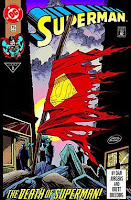
While 3Defence can agree with the media to some extent, we can't see much benefit in pointing out a whole bunch of flaws in currently released films. We don't need Hollywood to immediately stop making any superhero films. There's clearly still an audience for them, and there's a wealth of material to draw from to continue telling interesting stories for decades to come. The media needs to move away from posturing about the 'death of the genre' and instead focus on how to 'reboot the genre' successfully in a more palatable way. To do this, we need to study other successful genre 'reboots'.
Man Of Steel's incarnation of Superman actually has a few parallels with Jason Bourne; a peaceful soul who's unsure of his identity, yet miraculously trained in combat, and ready to fight anyone who threatens him. Of course, that's where the similarities end.
Man Of Steel might well mark the end of its genre's era, while
The Bourne Identity is rightly regarded as a landmark event that changed the fate of the 'action' and 'spy' genres forever.
In 2002,
The Bourne Identity removed wire-work and excessively balletic kung-fu from the action film. Instead of behemoths like Arnold or Sly, the averagely-built Matt Damon carried the main role.
The Bourne Identity's set-pieces were staged in cramped European apartments, and cast an
indie darling as the hero's love interest. Women in the series had realistic character qualities, independent lives of their men-folk,
were placed in powerful positions, and ultimately became the series'
moral guardians. More importantly than anything else though,
The Bourne Identity and its sequels were action films that weren't afraid to embrace silence. Critics and audiences alike fawned over this breath of fresh air, and the action genre was revitalised enough to buy itself another decade in multiplexes. Single-handedly, the
Bourne films also forced drastic revisions to stalwart espionage franchises like
James Bond and
Mission Impossible.
Not that we're trying to bash on The Guardian or anything (though we do relish taking a snipe at periodicals that hypocritically bash comic books as a "plebeian, populist artform") but in the early 2000s, The Guardian bashed on the Bond and Tom Cruise
Impossible outings with all too familiar criticism.
The World Is Not Enough "looks so weirdly dated" and "commonplace."
MI2 was "devoid of real risk, real sweat or real danger." You can guess how The Guardian's
Does Hollywood Need Saving From Superheroes article concludes, right? Yep, "it's the same movie – over and over and over again."
They've got several good points. Just look at the above image, where three superheroes essentially share the same pose. We just wish The Guardian hadn't been such snobs about it. It's not like they're also going to write an article bemoaning the sexism and monotony of the romantic comedy genre. Indeed, every article that's been written about the genre this month has had an air of 'this is kids stuff really, it's a bit beneath us adults.' And perhaps that's why
The Bourne Identity is a good touchstone.
Like the original
X-Men film too, these two genre reboots were fearless in the way they embraced their particular genre's roots, whilst still subverting their genre-audience's expectations. People were sold a spy film with
The Bourne Identity, but they also got Matt Damon having meaningful dialogue with Franke Potente (don't get us started on the 'relationship' between the era's James Bond and
Dr. Christmas Jones).
X-Men may have been marketed with its special-effects, but audiences were really given a film about the differing human rights concerns of adolescents and
the generations that controlled their fates. Maybe the world was hoping
Man Of Steel would provide a reboot in the same vein as these films, and the media has seized on the opportunity to bash it for being a merely serviceable evolution of a genre that's outstayed its welcome.
So what's stopping Hollywood from pulling a
Bourne-styled rabbit from their hat? There's a few things working against them. For one thing, the vast majority of upcoming superhero films are coming from Marvel directly. They're not just licensing their comic-book content to another studio; they're becoming a fully-functioning studio themselves, in charge of their own film adaptations now. This is dangerous, because many (not all) of these comics have historically been aimed at men, and rarely feature self-contained narratives. If the studio churning out this product is left to its own devices, then it seems likely it will continue creating sprawling plots
that take several films to resolve themselves, and attempt gender parity via a few scenes of a woman kicking or punching a male character.
The more significant thing holding Hollywood back is the financial imperative to
not change anything. Films like
The Amazing Spider-Man and
Iron Man 3 see overseas markets double their US-based box office grosses now. This means that superhero films regularly make 2/3rds of their money in countries that might not necessarily have grown up reading the comics the films are based on, and definitely haven't grown up with Western humour or the mythologies the genre has traditionally embraced. By necessity, blockbusters on this global scale have to play broadly, and there's not much room allowed for genre subversion, societally contextual humour, political dissidence or familial unrest. When you factor 3D into the mix... things change even more. This article's already sprawling, and we're aware we've not discussed 3D at all yet, despite this being a site devoted to 3D cinema. Let's not mince our words: 3D grosses are slowly declining in the US and some (not all) of the Western world, but 3D business is still doing gangbuster business in places like China, Brazil and Russia. Indeed, 3Defence's incoming traffic sky-rockets weekly as people from these countries ask Google (and
Baidu) "should I see X superhero movie in 2d or 3d?"

If you removed 3D box office 'extra' takings from the equation, then the distribution of box-office grosses would balance more favourably again towards countries like the US, UK and Australia. Two prominent 2D superhero films,
Iron Man 2 and
The Dark Knight actually earned more in the US than they did worldwide. So it's no mistake that the 3D
Iron Man 3 doubled the gross of its predecessor.
Doubled. As long as 3D has that kind of a result, Hollywood will continue paying the estimated $10 - $20 million extra it costs to add 3D to a film. And when it makes that sort of an additional investment, Hollywood expects its money back, and will advocate for playing broadly to guarantee that happens. When you go broad, you miss out on subtleties of the kind offered by Matt Damon's
Bourne character, and you certainly miss out on a subtext about the rights of homosexuals in our modern society like
X-Men offered.
We're not saying that 3D is the entire problem with the superhero genre, but it's one part of the problem. If you look at the types of genres that are still being made in 2D - such as comedies, detective films, dramas, thrillers - then you also start to see that these films are the ones that cost such a small amount that they're allowed to be edgy or outside of the mainstream four-quadrant blockbuster formats. A 2D $25 million film like Anchorman costs roughly 1/10th of the budget for the 3D $225 million Man Of Steel, and the lower-budget film has a lot to say about society's casual sexism while the big-budget film has basic thoughts on the evils of... terraforming.
When you start to truly look at the problems Hollywood faces, it becomes clear there is a solution, and it's right in front of their noses. Create superhero films that embrace
actual genres. Get rid of the
X-Men template, which has now been distilled to a meaningless 'superheroes for superheroes sake'. Instead, look to existing titles like
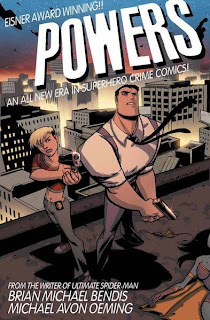
Powers; a detective story that features a buddy-cop pairing of a talkative but capable young woman and a brooding hulk of a world-weary man. With the successful release of the (again, 2D) film
The Heat, we know there's an audience for women in the buddy-cop / detective genres. And the great thing about
Powers is that, because the pair usually investigate the deaths or crimes of superheroes after-the-fact, there's little need for flashy special effects or whizz-bang 3D gimmickry. You could make a taut film adaptation of
Powers for $45 million, and critics would praise the way you'd dealt with the collateral damage and psychological impact recklessly wrought by caped crusaders.
Of course, there are dozens of other titles that are just as deserving of the big-screen treatment as
Powers.
Batman Begins could have been made for half its budget if they'd adhered more closely to the detective-thriller
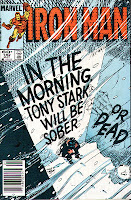
Batman: Year One comic. That might have allowed more room to talk about our society's attitude to criminals, beyond Machiavellian chemical-warfare schemes. There are decades worth of Iron Man comics that realistically deal with alcoholism, as real a worldwide issue as any, but we'd be surprised if Disney/Marvel ever sanctioned a low-budget rehab drama featuring ol' Shellhead (though watching Robert Downey Jnr. tackle that would be particularly interesting!).
So, yes, you're reading this right. 3Defence is advocating more 2D superhero films, for at least as long as it's cost-prohibitive to make a 3D version of a movie. But then, we're cinema advocates here, not just 3D ones. A 'holy grail' situation is obviously a time when movie production and distribution costs are lowered significantly, and producers can begin releasing more 3D dramas, 3D comedies and 3D crime films. When that happens it's likely that Hollywood will finally wise-up and start inserting their A-list superheroes into these genres. When The Bourne Identity equivalent of a superhero film comes along, it's going to change everything overnight... just like the bite of a radioactive spider or a sudden burst of gamma rays. Next time you catch your favourite publication ranting about the low-brow nature of a populist form of entertainment, ask them how they suggest improving things. They have great power, and they should start taking that responsibility seriously.


