Showing posts with label Iron Man 3D. Show all posts

Wednesday, May 14, 2014

How's the 3D in 'Captain America: The Winter Soldier'?

Read about the poster here - http://paolorivera.blogspot.com/2014/03/captain-america-winter-soldier.html

Background

This April, Captain America: The Winter Soldier kicked off the 'Summer' movie-going season early. Its over-sized box-office takings match the muscle and reputation of the hero himself, and critics were quick to praise the film too. He's the linchpin for Marvel's Cinematic Universe, which is why it's the fourth time we've seen Cap in 3D. Is this the definitive Steve Rogers story? How does the 3D fare in comparison to the post-converted likes of Iron Man Three or The Avengers? Join us for this in-depth review of the film's stereo effects, and let us know if we've missed anything!

Post-Converted 3D

Marvel makes bold bets on its directors. In retrospect, many of their choices often made total sense; Shakespearean-influenced Kenneth Brannagh was well matched with Thor, as was the wise-cracking Iron Man helmer Jon Favreau. While some of their directors had previously made big-budget films, none had ever made a 3D movie. We assume that's why the studio's 3D output to date has largely been post-converted; why make a nervous director's job harder than it needs to be on set? The technology improves every day, but filming in native 3D remains a challenge for even the most experienced of directors. Captain America: The Winter Soldier was not filmed by the likes of Peter Jackson or James Cameron. It was filmed by the directors of TV's Arrested Development, Anthony & Joe Russo. As best as we can tell, Marvel never divulged the reason they chose to post-convert this movie, but we assume the directors' green-ness to big-budget movie-making contributed to the decision.


As a result, the task of manually post-converting this behemoth of a movie fell to Stereo D and lead stereographer Anjel Alcaraz. We've covered their work before. They do a fine job of subtly enhancing 2D footage. 3Defence takes the view that Stereo D are a reliable shop, generally churning out quality work that is worthy of your attention. Indeed, they won a 3D industry award for their work on The Avengers, and we expect they'll be seeking recognition for their efforts here on Captain America: The Winter Soldier too.

How's The Depth of the 3D?

Captain America can't fly like Iron Man. He can't soar through the air like Thor and his hammer. He is basically human-sized, unlike Hulk. He doesn't web-sling, use magic, and he's not even a pint-sized gun-toting racoon. His buddies in this movie are all human too: Black Widow, Nick Fury and The Winter Soldier himself. To put it bluntly; stories about Steve Rogers don't necessarily call for depth imbalances in the way that his Marvel buddies' movies do.


Without a depth imbalance based on character size itself, usually 3D movies convey depth by relying on an arresting visual. For example, a character overlooking a large vista (say Sandara Bullock's space-faring character in Gravity), or one placed atop of a large structure (say Will Smith on the Apollo mission's launch pad in Men In Black 3). For much of Captain America: The Winter Soldier, this type of 'imbalance' is not achieved. The nearby landscape - low-rise Washington DC - is neither spectacular or noteworthy. The foes are identifiably human-sized, and generally fighting in close proximity. Indeed, the film is purposefully shot in a way that invokes the memory of paranoid and close-quarters 70s thrillers like All The President's Men. Much of the movie is also shot in a traditional way; a blurry object is in the deep foreground, while a mid-ground character commands a sharp focus against a blurry background.

 
There's an interesting opening set-piece, set on the decks of a boat. It's closest 3D peer is Life Of Pi's shipwreck scene. There, Ang Lee shot the action from close angles, as if the camera operator were in the same predicament as the protagonist. Captain America's seafaring battle is similarly chaotic, but is filmed more objectively. The film-makers are unafraid to pull back a long way, to show the full speed and agility of their hero. It's an interesting touch, especially in light of how few film-makers have filmed superheros this way recently. The Dark Knight, Spider-Man, Superman, Thor, Iron Man and a myriad of others have often been filmed 'just over the shoulder' in a way that makes the action seem more immediate, but also makes their heroes appear more human. There were moments in the opening battle where distance and depth helped convey how powerful Steve Rogers is, and how superhuman his abilities are.


Where the film really comes alive though, from a depth perspective, is its last half-hour. Set high in the air courtesy of S.H.I.E.L.D.'s helicarriers and accompanied by a flying Falcon, the super-sized action allows for an explosive finale. Still, there's nothing in this sequence that comes close to Iron Man Three's airplane freefall or even the skyscraper-soaring conclusion to The Avengers. The action here is also shot largely in the traditional modern superhero style of 'just over the shoulder', so you'll be disappointed if you're looking for new bench-marks in depth here.


Does the 3D 'pop'?

While objects don't fly out into the audience, objects like Captain America's shield regularly fly from the background right up to the edge of the screen. You won't spend much of the movie ducking for cover.


Did it make sense to add 3D?

Dark, gritty, political thrillers are not a natural fit with 3D. We weren't particularly blown away by the post-conversion used in this film's predecessor (Captain America: The First Avenger) either. Thankfully, someone in charge of The Winter Soldier made sure they catered many of the film's set-pieces with 3D in mind: the biggest action sequences all happen in broad daylight. Sunlight helps provide clear and crisp images to a glasses-wearing audience. By setting their fast-paced fight scenes in the afternoon the Russo Brothers made 3D easy on the eyes. We thank them!


The film itself

This is the easiest section to write for this review: it's a great movie. At the time of writing, it's firmly placed in the IMDb Top 250. The film's best watched with some beginner's knowledge of the Marvel Cinematic Universe, but it's definitely easy to keep up with for outsiders. Chris Evans nails his part, and Scarlett Johansson continues to play Black Widow with a surprising intensity (though we'd like her part more if she were filmed from the same distance as her male peers and if there were more meaningful female characters for her to talk to). The Winter Soldier himself is a meaningful 'bad guy' (particularly if you've seen The First Avenger) and his relationship with Captain America is pivotal to the story. You couldn't ask for a better comic book movie this early in 2014.

If we had to archive one version, should we save the 2D or the 3D?

We hope this review of Captain America: The Winter Soldier's 3D has been regarded as largely positive. If anything, we at 3Defence are 'lukewarm' on the conversion. We're going to side with the 2D version. There's nothing to 'dislike' here, and 3D haters would struggle to point at anything that detracts from the movie-going experience. However, 3D enthusiasts would also struggle to find much that radically improves the movie-going experience in stereo. This is about as middle-of-the-road as it gets.

Friday, January 31, 2014

And the Oscar goes to... a 3D film?


This year's Awards Season is gearing up for its main event: the 86th Academy Awards. Many cinephiles justifiably find the concept of 'Awards Season' horrifying. They can validly cite examples through the years where Oscar was wrong  (My Fair Lady over Strangelove? Crash over Good Night and Good Luck? Shakespeare In Love being allowed in the same room as the first 20 minutes of Saving Private Ryan?) and they can cite many more examples where films "should at least have been nominated!" Thankfully, the Academy broadened the nomination pool after universal outcry at The Dark Knight's nomination snub in 2008, and that's alleviated those tensions a little. It means we get a more balanced summary of the year in cinema: edgier films get nominated (District 9, Amour), and broader-playing fare (Up, The Help) makes the cut as a nearer summary of what movie-goers... go to the movies for in the first place.

The Nominees

2013's nominees are typical of the post-Dark Knight era: a David O. Russell "actor's movie"; a film about American racial discrimination; a couple of films about elderly people; a movie about finding love in an unlikely place; a smattering of biopics and... a 3D film. Wait, what was that? A 3D film, nominated for Best Picture? You got it. Every year since 2008 there has been at least one 3D film nominated for Hollywood's biggest accolade. In 2009, there was Avatar and Up. In 2010, Pixar stayed the course with Toy Story 3. Scorsese's Hugo literally popped out of the screen in 2011. Life Of Pi followed in 2012, and now we have the big kahuna: Gravity. We'll get to Gravity's chances later though.


For now, let's discuss what this means for the acceptance of 3D in Hollywood and the 'mainstream'. Does it mean anything at all? Given the post-Dark Knight boom in Oscar nominations, it seems easy to discredit any significance a 3D-focused site like ours might impose. So, we've decided to go one further. Today we're going to look at broader trends within The Academy Awards for the nomination of 3D films in the modern age, to see if we can read the tea-leaves for Hollywood's true view on 3D movie-making.


Cinematography

From 1928 onwards, every Academy Award for Best Cinematography was given to a 2D movie. Depth was communicated with focus pulling, the mono illusion of parralax, or a savvy combination of both. Those two concepts were fundamental to how cinematography "worked". At least, that was how it "worked" until 2009. That year, Mauro Fiore took home an Oscar for his revolutionary work on the 3D film Avatar. Two years later (enough time for Hollywood to hastily revisit this whole 3D business) Robert Richardson deservedly earned his third Oscar for his stereo work on Hugo. The 85th Academy Awards officially made it a trend: Claudio Miranda and his team were rewarded for working with the ocean & kids & animals & 3D on Life Of Pi. And guess what? 2013's Best Cinematography Oscar has another 3D film nominated: Gravity. We'll find out how realistic Emmanuel Lubezki's chances are after the American Society of Cinematographers announce their Award for Outstanding Achievement later tonight.


Visual Effects

So, we've established there's a trend underway for 3D Best Picture nominees, and 3D Best Cinematography winners. What about any other categories? As it happens, 3Defence has done deeper digging to reveal other surprises. The Academy Award for Best Visual Effects has been inundated with 3D films. This isn't that surprising: visual effects are expensive, and 3D is where the money is these days. The exponential growth in this field is surprising though. In 2006, Superman Returns was the first (partial) 3D film to be nominated in the category, Avatar was the first to win, and then - like the cinematography field - two years later a veritable deluge arrived. 2010 had one 3D nominee (Alice In Wonderland), while 2011 saw a 3D winner (Hugo) and 2 nominees (Transformers 3, and Harry Potter 7.5). 2012 saw another 3D winner (Life Of Pi) and 3 nominees (The Hobbit 1/3, The Avengers 1, and Alien 0.5 Prometheus). 2013... 4 of the 5 nominees are 3D movies (The Hobbit 2/3, Iron Man 3, Star Trek 12 2, and of course, Gravity). While we're a wee way off from 2014's nominees, it's fair to assume that we'll see a similar ratio of nominees this year (likely contenders are The Planet of The Apes 8 2, The Hobbit 3/3, Maleficent and Transformers 4), and probably the following year too. 3D is here to stay in the visual effects category.

Animation

You'd imagine that, having exhausted the two most obviously 'visual' categories, we'd be done with the 3D-focused trend at the Oscars... but then you'd be forgetting Best Animated Feature. Guess what? Since 2008, 4 out of 5 Animated Feature winners were 3D films (WALL-E, Up, Toy Story 3 and Brave), and in addition to that, 10 of the nominees were 3D films too. It's a hard call who will win this year; will the 2D Miyazaki effort The Wind Rises reward the animation legend for his years of long-service, or will the Academy bow to the populist choice and reward the 3D hit musical Frozen? At this point we'd peg the chances for both at 50:50.


Other Technical Categories

Following on from these trends, 9 Oscars for 3D films have also been dealt out amongst the Production Design, Sound Editing, Sound Mixing, Original Score,  Costume Design, and Best Original Song categories. Notable absences can be found in the editing, hair & makeup, costume and two screenplay categories. It's possible Gravity will buck the trend for editing, and The Great Gatsby does the same for Costume Design, but we wouldn't recommend betting the house on either!


A 3D Film For Best Picture?

Which leads us back to Gravity's Best Picture nomination. Will it be the first 3D film to win the industry's most coveted of awards? It's got good chances. In its director, Alfonso Cuarón, the film has a 'career come-back' narrative that Academy voters love (his last film, Children Of Men, was well regarded critically, but poorly attended at the box-office). The film has the 'popular vote' sewn up, with wider audiences still paying millions to see it on the big-screen, despite it being 3+ months into its cinematic release. The Director's Guild of America gave its top honour to Cuarón, and the Producer's Guild gave a rare tie to Gravity and 12 Years A Slave. The scales are weighed in Gravity's favour, save for one thing: it's not got many actors in it. 22% of Academy voters are actors, and they have historically bestowed Best Picture awards out to, well, 'showy' films with large casts (see Crash, for example). It's certainly possible their enduring love for Sandra Bullock will help out Gravity's chances, but we at 3Defence would be weary of giving the film more than 60:40 odds to take out the Best Picture Oscar.


Still, the very fact this conversation is possible is amazing. Within a month's time, either 3D movie-making will either finally be legitimized, or we will have to wait for another year to have this debate all over again. No matter what happens, it's clear that - from Hollywood's perspective at least - 3D is here to stay. The movie industry's own voters are recognising the technical excellence being used to pull off stereo movies convincingly, and are rewarding their talented crew and studios accordingly. Fingers crossed Gravity helps break some more records on March 2nd!

Friday, July 5, 2013

Is The Guardian Correct? Are Superhero Films Done For?


In a week's time, it'll be the first X-Men film's 13th birthday. The movie's critical and commercial success gave Hollywood the excuse it needed to revitalise the comic-book-movie 'genre'. X-Men delivered the industry a template of sorts that has largely remained unchanged in the decade that followed. That template required an ensemble cast, mixing up A-list stars with Academy Award winning actors, character veterans, relative newcomers and a few nerd favourites. X-Men also set a visual-effects precedent that eschewed the overblown Batman And Robin 'look' in favour of more modern effects in the vein of The Matrix. The revised superhero film template also required the X-Men ditch their traditional bright yellow-and-blue tights for... very Matrix-esque black leather costumes. And, just like that, a modern genre was born.


Or, rather, reborn. The superhero 'genre' had merely been laying dormant. In the decades since Richard Donner's Superman, we'd seen various attempts at Batman, Supergirl, Dick Tracy, The Phantom, The Shadow and The Rocketeer. Some of those films had a significant impact on pop-culture, but none rejuvenated an entire industry in the same way as X-Men. Why was that? 3Defence argues that it was X-Men's striking modernity that made it connect with film producers and audiences alike. This superhero film featured women kicking as much butt as their male peers did. It was set in the 'not too distant future', and had a hip bent towards sci-fi conventions that other comic-books had previously neglected. Crucially, X-Men had an interesting subtext; prominently featuring a mutant-superhero allegory for the Gay and Civil Rights movements. For the first time, Hollywood was presenting a superhero film that (successfully...) had something important to say.


Thirteen years later, we've seen 3 actors play Hulk, 2 actors play Superman, one actor play Batman 3 times, a former Hollywood punchline play Iron Man 5 times and we're about to see Hugh Jackman play an X-Men character for the 6th time. We've even seen two variations of Catwoman, and Ryan Reynolds (Blade 3Wolverine: OriginsThe Green Lantern) is days away from the release of his fourth comic-book adaptation! It's easy to feel over-saturated by it all. Of course, this is how it's always felt when you walk into a comic-book store: cross-over titles, mash-ups, alternate universes, one-shots, long-running series, and retrospective collector's editions... the 'comic' world of heroes has never been particularly shy about throwing any old thing against the wall.


Maybe it was that scatter-shot approach that erked The Guardian enough to write a recent piece entitled "Man of Steel: does Hollywood need saving from superheroes?" A fortnight later, The Hollywood Reporter released a piece condemning the genre's bias towards fight-scenes, entitled "Why Has Destruction Become the Default' in Movies?" Kiwi favourite Funerals & Snakes has a great write-up arguing the destruction in the genre has become an arms-race. Tech-focused Wired magazine has just released an article asking, "Is the Superhero Movie Genre as Invulnerable as Its Iconic Characters?" A quick Google search reveals a simmering 'genre malaise' from the media has been around for some time, and will likely be around for much longer. The Wall Street Journal supposed audiences were tiring of the genre in 2011. USA Today asked - amusingly, in retrospect - "Are Superheoes Done For?" in... 2008. So, The Guardian, Wired and THR's recent articles are nothing altogether new, but it's interesting they all use Man Of Steel as a divining rod for the fate of the wider genre.


***Warning! Spoilers within this paragraph about Man Of Steel! If you've not seen the film, then skip this paragraph!*** What is it about Superman's latest film that has convinced the mainstream press of the genre's imminent demise? Perhaps it's their expectations of Superman himself that's the cause of the issue. Historically, he's been considered the Big Blue Boy Scout of superheroes (even if that's not actually been the case in the last 25 years of comics). So, perhaps it was all a bit too shocking for average audiences to watch that Boy Scout break his nemesis' neck, after having levelled several dozen city blocks. Indeed, even many modern comic-book readers were shocked by this moment, and were outraged that Superman allowed citywide catastrophic damage to occur in his mammoth battle with Zod's troops. This was meant to be the most 'super' of heroes, but instead we saw an inactive character who was focused on fighting his adversaries in a retaliatory manner. ***Spoilers over now, continue***

More importantly though, Man Of Steel is a significant departure from the X-Men-issued genre template. The cast is hardly heavy-hitters like those seen in The Dark Knight or Iron Man series; Man Of Steel's veteran actors haven't anchored a film in well over a decade, and most have been involved in straight-to-video fare for years. Man Of Steel's special-effects aren't facsimiles of other industry benchmarks either. Superman embraces his bright blue & red costume too; no hip dark leathers here. And, most importantly, there is a dearth of subtext.


In the days since X-Men, critics have delighted in subtextual readings of superhero films. The Dark Knight series has been remembered as a commentary on the Bush administration's anti-terrorism tactics; Ang Lee's Hulk was a musing on Classical mythologyWatchmen was a cautionary tale about 'checks and balances'; V For Vendetta provided a big-screen adaptation of a comic-book interpolation of Orwell's 1984. Iron Man even spoke to the perils of the arms trade. So... what does Man Of Steel speak to? Being facetious, we could say the subtext is that it's rude to terraform planets that don't belong to you, and also rude to punch people. Being more generous (though still with a healthy helping of snark) it's possible to read Man Of Steel as a cautionary tale in the age of Big Data: keep your secrets to yourself, no matter what, or else the government will screw things up. But, yes, that's being generous. There's actually bugger all subtext going on in Man Of Steel. It's another case of too much plot, and too little story. And, as The Guardian points out, perhaps we're a little tired of relying on a bootstrapped operation to right the ills of government. Maybe the media are onto something, maybe there really is something broken with Hollywood's approach to the genre?
While 3Defence can agree with the media to some extent, we can't see much benefit in pointing out a whole bunch of flaws in currently released films. We don't need Hollywood to immediately stop making any superhero films. There's clearly still an audience for them, and there's a wealth of material to draw from to continue telling interesting stories for decades to come. The media needs to move away from posturing about the 'death of the genre' and instead focus on how to 'reboot the genre' successfully in a more palatable way. To do this, we need to study other successful genre 'reboots'.

Man Of Steel's incarnation of Superman actually has a few parallels with Jason Bourne; a peaceful soul who's unsure of his identity, yet miraculously trained in combat, and ready to fight anyone who threatens him. Of course, that's where the similarities end. Man Of Steel might well mark the end of its genre's era, while The Bourne Identity is rightly regarded as a landmark event that changed the fate of the 'action' and 'spy' genres forever.


In 2002, The Bourne Identity removed wire-work and excessively balletic kung-fu from the action film. Instead of behemoths like Arnold or Sly, the averagely-built Matt Damon carried the main role. The Bourne Identity's set-pieces were staged in cramped European apartments, and cast an indie darling as the hero's love interest. Women in the series had realistic character qualities, independent lives of their men-folk, were placed in powerful positions, and ultimately became the series' moral guardians. More importantly than anything else though, The Bourne Identity and its sequels were action films that weren't afraid to embrace silence. Critics and audiences alike fawned over this breath of fresh air, and the action genre was revitalised enough to buy itself another decade in multiplexes. Single-handedly, the Bourne films also forced drastic revisions to stalwart espionage franchises like James Bond and Mission Impossible.

Not that we're trying to bash on The Guardian or anything (though we do relish taking a snipe at periodicals that hypocritically bash comic books as a "plebeian, populist artform") but in the early 2000s, The Guardian bashed on the Bond and Tom Cruise Impossible outings with all too familiar criticism. The World Is Not Enough "looks so weirdly dated" and "commonplace." MI2 was "devoid of real risk, real sweat or real danger." You can guess how The Guardian's Does Hollywood Need Saving From Superheroes article concludes, right? Yep, "it's the same movie – over and over and over again."


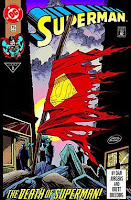
They've got several good points. Just look at the above image, where three superheroes essentially share the same pose. We just wish The Guardian hadn't been such snobs about it. It's not like they're also going to write an article bemoaning the sexism and monotony of the romantic comedy genre. Indeed, every article that's been written about the genre this month has had an air of 'this is kids stuff really, it's a bit beneath us adults.' And perhaps that's why The Bourne Identity is a good touchstone. Like the original X-Men film too, these two genre reboots were fearless in the way they embraced their particular genre's roots, whilst still subverting their genre-audience's expectations. People were sold a spy film with The Bourne Identity, but they also got Matt Damon having meaningful dialogue with Franke Potente (don't get us started on the 'relationship' between the era's James Bond and Dr. Christmas Jones). X-Men may have been marketed with its special-effects, but audiences were really given a film about the differing human rights concerns of adolescents and the generations that controlled their fates. Maybe the world was hoping Man Of Steel would provide a reboot in the same vein as these films, and the media has seized on the opportunity to bash it for being a merely serviceable evolution of a genre that's outstayed its welcome.


So what's stopping Hollywood from pulling a Bourne-styled rabbit from their hat? There's a few things working against them. For one thing, the vast majority of upcoming superhero films are coming from Marvel directly. They're not just licensing their comic-book content to another studio; they're becoming a fully-functioning studio themselves, in charge of their own film adaptations now. This is dangerous, because many (not all) of these comics have historically been aimed at men, and rarely feature self-contained narratives. If the studio churning out this product is left to its own devices, then it seems likely it will continue creating sprawling plots that take several films to resolve themselves, and attempt gender parity via a few scenes of a woman kicking or punching a male character.

Taken from here

The more significant thing holding Hollywood back is the financial imperative to not change anything. Films like The Amazing Spider-Man and Iron Man 3 see overseas markets double their US-based box office grosses now. This means that superhero films regularly make 2/3rds of their money in countries that might not necessarily have grown up reading the comics the films are based on, and definitely haven't grown up with Western humour or the mythologies the genre has traditionally embraced. By necessity, blockbusters on this global scale have to play broadly, and there's not much room allowed for genre subversion, societally contextual humour, political dissidence or familial unrest. When you factor 3D into the mix... things change even more. This article's already sprawling, and we're aware we've not discussed 3D at all yet, despite this being a site devoted to 3D cinema. Let's not mince our words: 3D grosses are slowly declining in the US and some (not all) of the Western world, but 3D business is still doing gangbuster business in places like China, Brazil and Russia. Indeed, 3Defence's incoming traffic sky-rockets weekly as people from these countries ask Google (and Baidu) "should I see X superhero movie in 2d or 3d?"


If you removed 3D box office 'extra' takings from the equation, then the distribution of box-office grosses would balance more favourably again towards countries like the US, UK and Australia. Two prominent 2D superhero films, Iron Man 2 and The Dark Knight actually earned more in the US than they did worldwide. So it's no mistake that the 3D Iron Man 3 doubled the gross of its predecessor. Doubled. As long as 3D has that kind of a result, Hollywood will continue paying the estimated $10 - $20 million extra it costs to add 3D to a film. And when it makes that sort of an additional investment, Hollywood expects its money back, and will advocate for playing broadly to guarantee that happens. When you go broad, you miss out on subtleties of the kind offered by Matt Damon's Bourne character, and you certainly miss out on a subtext about the rights of homosexuals in our modern society like X-Men offered.

We're not saying that 3D is the entire problem with the superhero genre, but it's one part of the problem. If you look at the types of genres that are still being made in 2D - such as comedies, detective films, dramas, thrillers - then you also start to see that these films are the ones that cost such a small amount that they're allowed to be edgy or outside of the mainstream four-quadrant blockbuster formats. A 2D $25 million film like Anchorman costs roughly 1/10th of the budget for the 3D $225 million Man Of Steel, and the lower-budget film has a lot to say about society's casual sexism while the big-budget film has basic thoughts on the evils of... terraforming.
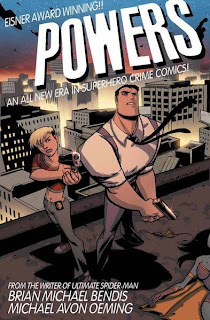
When you start to truly look at the problems Hollywood faces, it becomes clear there is a solution, and it's right in front of their noses. Create superhero films that embrace actual genres. Get rid of the X-Men template, which has now been distilled to a meaningless 'superheroes for superheroes sake'. Instead, look to existing titles like Powers; a detective story that features a buddy-cop pairing of a talkative but capable young woman and a brooding hulk of a world-weary man. With the successful release of the (again, 2D) film The Heat, we know there's an audience for women in the buddy-cop / detective genres. And the great thing about Powers is that, because the pair usually investigate the deaths or crimes of superheroes after-the-fact, there's little need for flashy special effects or whizz-bang 3D gimmickry. You could make a taut film adaptation of Powers for $45 million, and critics would praise the way you'd dealt with the collateral damage and psychological impact recklessly wrought by caped crusaders.
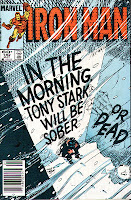
Of course, there are dozens of other titles that are just as deserving of the big-screen treatment as Powers. Batman Begins could have been made for half its budget if they'd adhered more closely to the detective-thriller Batman: Year One comic. That might have allowed more room to talk about our society's attitude to criminals, beyond Machiavellian chemical-warfare schemes. There are decades worth of Iron Man comics that realistically deal with alcoholism, as real a worldwide issue as any, but we'd be surprised if Disney/Marvel ever sanctioned a low-budget rehab drama featuring ol' Shellhead (though watching Robert Downey Jnr. tackle that would be particularly interesting!).

So, yes, you're reading this right. 3Defence is advocating more 2D superhero films, for at least as long as it's cost-prohibitive to make a 3D version of a movie. But then, we're cinema advocates here, not just 3D ones. A 'holy grail' situation is obviously a time when movie production and distribution costs are lowered significantly, and producers can begin releasing more 3D dramas, 3D comedies and 3D crime films. When that happens it's likely that Hollywood will finally wise-up and start inserting their A-list superheroes into these genres. When The Bourne Identity equivalent of a superhero film comes along, it's going to change everything overnight... just like the bite of a radioactive spider or a sudden burst of gamma rays. Next time you catch your favourite publication ranting about the low-brow nature of a populist form of entertainment, ask them how they suggest improving things. They have great power, and they should start taking that responsibility seriously.

Friday, June 21, 2013

How's the 3D in 'Iron Man 3'?


Background

Obviously the third film in the series, Iron Man 3 is actually the fifth time we've seen Robert Downey Jr. play the role of Tony Stark. It's also the second time he's collaborated with the film's director, Shane Black. For the latest Stark instalment, the pair have conspired to chop the titular hero's ego down to size, perhaps hoping to provide a more likeable character arc than what Iron Man 2 offered us. We'll discuss plot points later though, for now, let's have a look at the third film's usage of 3D! How was it? Should you see it in 2D or 3D? We'll investigate below in our usual template-driven style, in the hopes you'll be able to make an informed movie-going decision.

Post-Converted 3D

Like The Avengers and Thor before it, Iron Man 3 was shot digitally, and post-converted into 3D. 3Defence's view of The Avengers was that the film greatly benefited from an extra dimension, and the movie-going public appeared to agree. Have you ever wondered why Disney & Marvel have been so gung-ho to post-convert their films to 3D? Maybe it's because they're hiring directors like Kenneth Branagh, Joss Whedon; veterans, but rusty or inexperienced when it comes to helming A-list, tent-pole, action blockbusters. In Shane Black's case, his sophomore directing gig is also the follow-up to the third biggest film ever! To make the film's production relatively smooth-sailing, we can understand why you'd want to film in 2D. The firm StereoD was brought in to pick up the slack.


StereoD are quickly carving out a reputation as the 'benchmark' firm when it comes to post-conversion. They've handled other well-respected conversions like the ones from The Avengers and Titanic 3D, and they no doubt put in a lot of effort to the work done for Iron Man 3. We've had uncharacteristically bad luck when it comes to researching the "hows" and "whys" the production took for the 3D used, so we're left to suppose a bit of conjecture here. Perhaps Mavel/Disney still think that post-conversion is frowned upon by audiences, and were loathe to reveal how the 3D was added afterwards? Is it possible they're burying news of post-conversions? That's definitely speculation, but the total radio silence on this conversion rang alarm bells for us.

Does the 3D 'pop'?

As is becoming a theme for superhero films, 'noise elements' like dust, snow, debris and sparks happily fly out of the screen. There's a lot of holographic images that buzz around the screen too. Characters don't break this 'fifth wall' of the screen though, they stay safely behind it. The mantra in Hollywood continues to be "classy" instead of using overt 3D effects on actors.

If I had a dollar for every comic franchise to use holographic 3D effects...

How's the depth of the 3D?

Iron Man 3 shines when it comes to depth. By far the most effective 3D sequence is a prolonged aerial free-fall, where Stark attempts to save several people plummeting to earth. Thanks to the stunning usage of stereo depth employed, we're constantly aware of how fast the ground is approaching. This sense of impending doom heightens (pun intended) the tension of the scene significantly, and will likely give viewers a real sense of vertigo. It probably helps that, for this scene at least, the crew filmed dozens of real-life skydiving jumps to capture the kinetic feeling of a free-fall. The 3D effects added in post-production enhance the feelings of immediacy for the viewer, so we'd consider them worthwhile and consistent with the story being told. It's a stunning piece of action, and fantastic 3D cinema.


Did it make sense to add 3D to Iron Man 3?

Superheroes and 3D generally seem a natural fit. Iron Man 3 is no Man Of Steel though. Take a look at the posters: they're set at nightfall, grimly lit and generally projecting more darkness than we'd like from a 3D film. Indeed, most of the pivotal action scenes are set at night or indoors, in dull offices and neutral corridors. The film's villain, The Mandarin, is lit and dressed like an Al Qaeda-issued video: shot in a cave, wearing camouflaged clothing - hardly the type of footage we'd normally advocate for in a 3D film. Even Iron Man's various Mark suits have had their colour vibrancy dialled down, and that's before 3D glasses added another 'muting' layer! The final image is muddy and, it would seem, poorly conceived for the 3D medium.

Dimly lit, boring background, neutral colours... not a good 3D mix

The film itself

Make no mistake about it: Iron Man 3 is a muddled mess. The first two acts are great fun, while the third act is a hastened and bombastic explosion of nonsense. The stakes are significantly lowered by the reveal that Stark owns autonomous suits that can do his bidding. This has the same effect that the droid army did in the Star Wars prequels - we have no emotional investment in the robots, so our engagement is significantly dialled back. To some extent, Marvel has been guilty of this for some time. They've regularly provided literal cannon fodder for their heroes and villains to dispatch without requiring a harsher rating. The Chitauri, the Frost Giants, the HYDRA agents, and now the spare suits of Tony Stark... all relatively faceless fodder for CGI-laden battles.

I have no idea what's going on here, even in 2D

If we had to archive one version, should we save the 2D or the 3D?

In this case, we're going to side with the 2D. With glasses on, you'll spend much of the last act wondering what the hell is going on. There's so many dark-coloured suits flying around, at night-time, for some reason in a shipyard, that your eyes will struggle to decipher meaning from the noise. Save some money and save your eyes the effort.